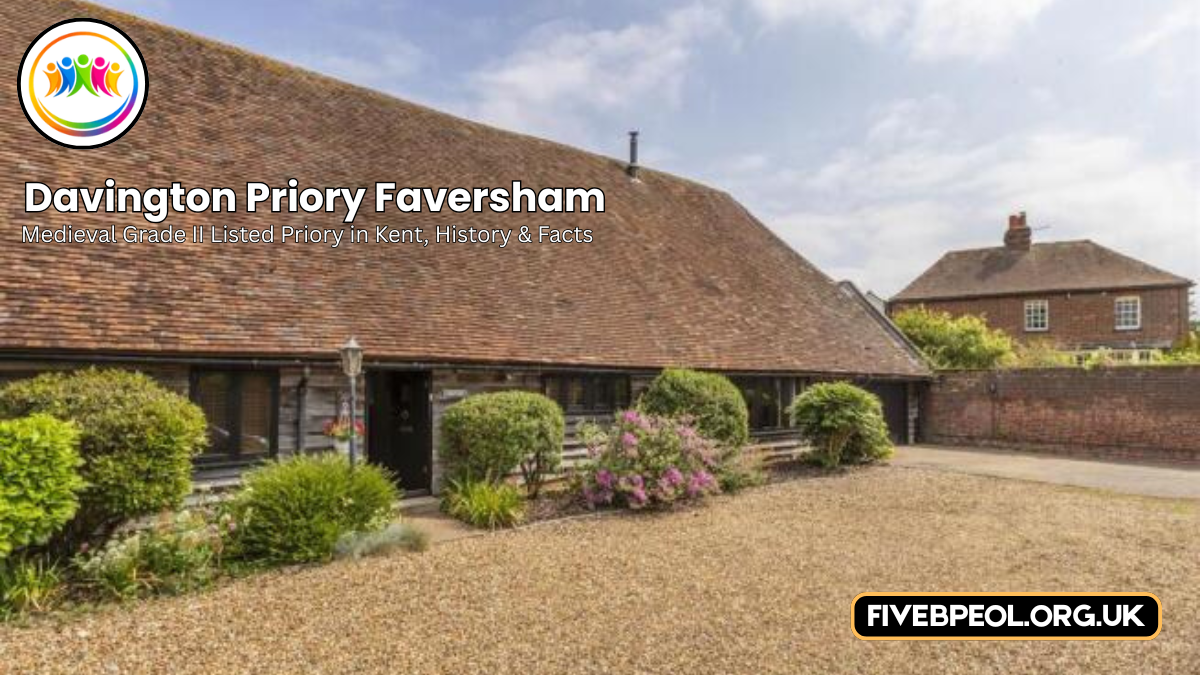
Davington Priory Faversham is one of Kent’s most captivating medieval landmarks, standing proudly on Davington Hill near the historic town of Faversham. Founded in the twelfth century, it reflects centuries of religious devotion, architectural endurance, and English heritage. Today, it remains a striking example of monastic survival, blending ancient stonework with a peaceful rural setting that continues to attract interest from historians and heritage enthusiasts alike.
Davington Priory Faversham holds a unique place in the story of medieval England due to its rare survival as a former Benedictine nunnery. While much of its original structure has evolved over time, the essence of its spiritual past remains deeply embedded in its walls. The priory’s atmosphere carries a sense of timelessness, making it one of the most fascinating historic sites in Kent’s cultural landscape.
History of Davington Priory Faversham
The origins of Davington Priory Faversham date back to 1153 when it was founded under the reign of Henry II as a Benedictine nunnery. It served as a religious sanctuary for nuns dedicated to prayer, discipline, and community service. During the medieval period, it played an important role in the religious and social life of Kent, reflecting the widespread influence of monastic institutions across England.
Over the centuries, Davington Priory Faversham experienced significant historical changes, especially during the Dissolution of the Monasteries in the sixteenth century. Unlike many religious houses that were destroyed, parts of the priory survived and were repurposed. This rare continuity allows visitors and historians to trace layers of English history within its structure, making it an exceptional example of preserved monastic heritage in the region.
Architecture of Davington Priory Faversham
The architectural design of Davington Priory Faversham showcases traditional medieval craftsmanship, primarily using stone and flint materials typical of Kentish construction. The surviving sections reveal glimpses of cloister life, including domestic chambers and religious spaces that once supported the daily routines of the Benedictine nuns. Its structural design reflects both functionality and spiritual symbolism from the twelfth century.
Davington Priory Faversham Also demonstrates how historic buildings adapt over time while preserving their original character. Later alterations have been carefully integrated into the medieval framework, ensuring the priory retains its historical identity. Its Grade II* listing highlights its national importance, safeguarding its architectural features and ensuring that future generations can continue to appreciate its remarkable heritage value.
Religious significance of Davington Priory Faversham
Davington Priory Faversham holds deep religious significance as a former Benedictine nunnery that shaped spiritual life in medieval Kent. It was a place of devotion, learning, and structured religious practice, reflecting the disciplined lifestyle of its inhabitants. The priory’s spiritual legacy continues to influence its identity, even though it no longer functions as a monastic institution.
The religious importance of Davington Priory Faversham extends beyond its historical role, as it remains connected to the broader story of Christianity in England. Its survival allows modern observers to understand the spiritual dedication of medieval communities. The priory continues to symbolise faith, resilience, and continuity within the changing landscape of English religious history.
St Mary Magdalene Church at Davington Priory Faversham
The Priory Church of St Mary Magdalene forms an essential part of Davington Priory Faversham, maintaining its active role in worship. This historic church preserves the spiritual atmosphere of the site and offers a direct connection to its medieval origins. Its peaceful setting allows visitors to experience a sense of continuity between past and present religious practices.
Davington Priory Faversham benefits greatly from the presence of the church, which keeps its spiritual heritage alive. Although the priory itself is privately owned, the church remains a symbol of community and tradition. Its architecture and historical significance contribute to the wider cultural importance of the site within Faversham and the surrounding Kent countryside.
Modern life and preservation of Davington Priory Faversham
Today, Davington Priory Faversham functions primarily as a private residence, blending historic preservation with modern living. Its transformation reflects centuries of adaptation while maintaining the essence of its medieval origins. The building continues to stand as a rare example of a monastic site that has been carefully preserved through changing times.
The preservation of Davington Priory Faversham is supported by its Grade II* listed status, which ensures strict protection of its historic fabric. Conservation efforts focus on maintaining its architectural integrity while allowing sensitive use as a home. This careful balance ensures the priory remains both functional and historically significant within contemporary Britain.
Faversham setting and local heritage context
Davington Priory Faversham is located within the historic town of Faversham, one of the oldest recorded settlements in Kent. The town is known for its medieval streets, maritime heritage, and strong cultural identity. The priory’s position on Davington Hill enhances its visibility and connects it to the wider historical landscape of the region.
The surroundings of Davington Priory Faversham add depth to its historical significance, as Faversham itself is rich in heritage sites and traditional English architecture. Visitors exploring the area can discover ancient churches, historic buildings, and scenic countryside views. Together, these elements create a strong sense of continuity between the priory and its environment.
Heritage importance of Davington Priory Faversham
Davington Priory Faversham is recognised as a significant heritage asset due to its rarity and historical depth. Its survival from the twelfth century provides valuable insight into medieval monastic life. As one of the few remaining structures of its kind in Kent, it holds exceptional cultural and architectural importance.
The heritage value of Davington Priory Faversham is further strengthened by its Grade II* listing, which protects it from inappropriate alteration. This designation ensures that its medieval character is preserved for future generations. The priory stands as a symbol of England’s enduring connection to its religious and architectural past.
Visiting and exploring Davington Priory Faversham
Although Davington Priory Faversham is not generally open to the public due to its private ownership, its exterior and surrounding area can still be appreciated from nearby locations. The adjacent church and the scenic setting of Davington Hill offer visitors a glimpse into its historic atmosphere and architectural beauty.
Exploring the area around Davington Priory Faversham provides a rewarding experience for those interested in English heritage. Faversham offers a range of historical attractions, walking routes, and cultural sites that complement the priory’s story. Together, they create a meaningful journey through Kent’s rich and layered history.
Conclusion
Davington Priory Faversham remains one of Kent’s most remarkable medieval landmarks, representing centuries of religious devotion, architectural evolution, and historical continuity. Its survival from the twelfth century to the present day makes it a rare and valuable piece of England’s monastic heritage, deeply rooted in the story of Faversham.
Davington Priory Faversham continues to inspire interest through its preserved structure and cultural significance. As both a private residence and a historic monument, it bridges the gap between past and present, ensuring that its legacy remains an enduring part of Kent’s rich and fascinating history.
FAQs
What is Davington Priory Faversham?
Davington Priory Faversham is a medieval former Benedictine nunnery founded in 1153, now a Grade II* listed historic building in Kent.
Where is Davington Priory Faversham located?
Davington Priory Faversham is located on Davington Hill in the historic town of Faversham, Kent, England.
How old is Davington Priory Faversham?
Davington Priory Faversham dates back to the 12th century, making it nearly 900 years old.
Is Davington Priory Faversham open to the public?
Davington Priory Faversham is generally not open to the public as it is a private residence, though the adjoining church may be accessible.
Why is Davington Priory Faversham important?
Davington Priory Faversham is important due to its rare survival as a medieval monastic site and its Grade II* listed heritage status.
Who lives at Davington Priory Faversham today?
Davington Priory Faversham is a private residence and has been associated with well-known private owners over the years.
What type of building is Davington Priory Faversham?
Davington Priory Faversham is a historic medieval priory originally built as a Benedictine nunnery.
Can visitors enter Davington Priory Faversham?
Visitors cannot enter Davington Priory Faversham itself, but they can view the exterior and nearby church area respectfully.
Also Read: todhead lighthouse